

The existence of hedgerows is as a direct result of destruction of woodland, at least that was how it began. Over time we have changed something destructive into something quite beautiful. In this blog post, I shall explain.
Bronze Age farmers didn’t have angry signs or elaborate fencing back then, so quite often when woodland was cleared to make space for farmland and settlements, lines of woodland would have remained to mark these borders. These hedgerows are considered to be the most ancient and well established hedgerows in the Country and many still remain today on the borders of old parishes.
During the 18th Century there was a lot of movement around the ownership of land and more and more land became “enclosed” and less land was common land. This meant that vast swathes of the English Countryside would be divided into sections. Hedgerows often formed defined boundaries between these areas.
In the East Midlands alone over 200,000 miles worth of hedgerows were plants along with the destruction of common land. Today these newer hedges tend to be straight and mostly made up of plants such as the Hawthorn whereas the Dogwood and Hazel are more commonly associated with older more established hedges

I am happy to say that we have an abundance of both ancient and more recent hedgerows in the Bromsgrove region. I have noticed on my walks hazelnuts starting to emerge that are picked almost immediately by hungry squirrels. Hedges are a great provider of nourishment to the local fauna and the fodder comes in many varieties.
Hedgerows are filled with fruit at this time of year. The Blackthorn produces delicious Sloes, providing memories of Christmas dinner with a Sloe gin aperitif and blackberries cling to the spiny branches , ripe and bursting with flavour as Autumn creeps in. You find that you can make a small meal out of these while leaving a good amount for the birds of course.

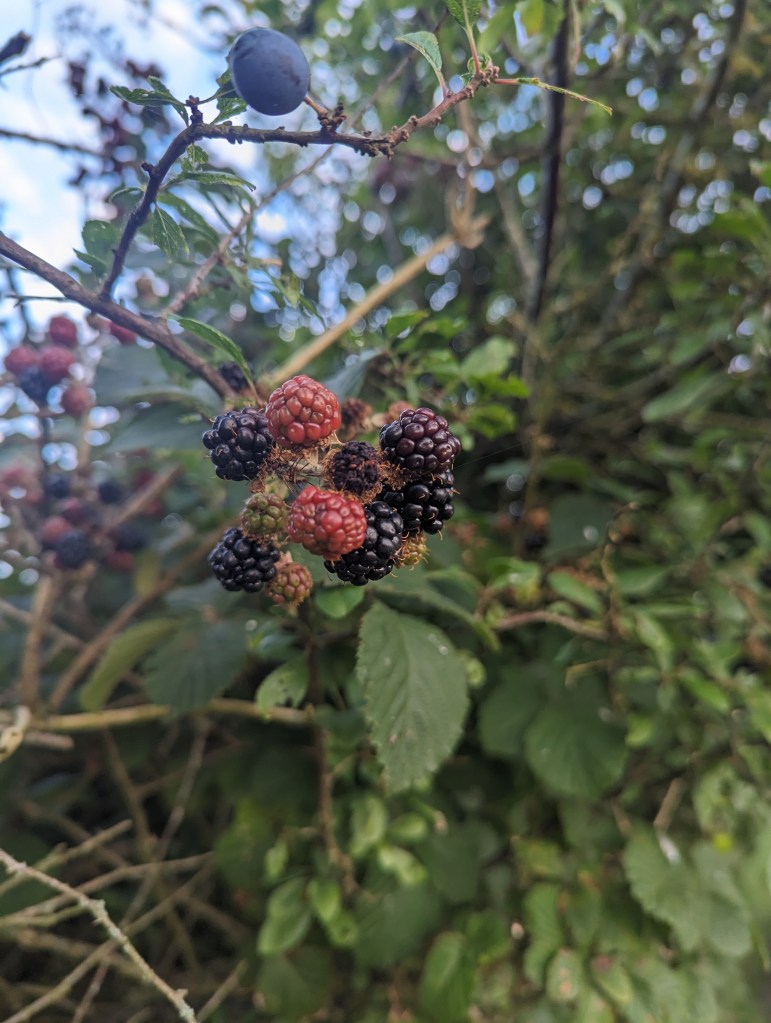
According to BBC Science Focus around 600 plant, 1,500 insect, 65 bird and 20 mammal species have been identified within British Hedgerows. This shows that their mere presence causes a rush of biodiversity to any area.
Dr Max Hooper was a pioneering Historian and Biologist who came up with a hedgerow hypothesis also known as Hooper’s Law in 1965. What this theorises is that you can essentially age a hedgerow by looking at the correlation with species number. So, if you take a 30m stretch of hedgerow and count the number of species discovered this provides a number which is the same approximately as the age of the hedge itself in years. This is based on the knowledge that the longer a hedgerow exists, the more species will end up calling it home.
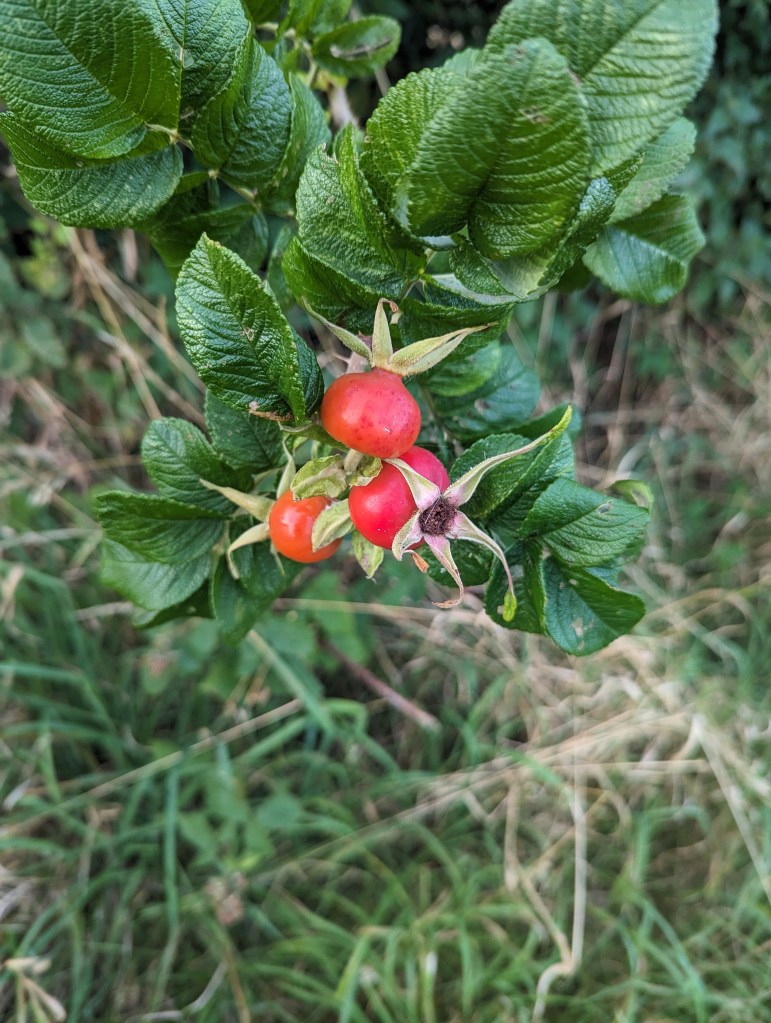
There are many species which rely heavily on Hedgerows for their food. Rosehips for example, rich in Vitamin C attract Blackbirds and Fieldfare which spend their Winter here in the UK and relish the nutrient content of these vibrant ruby jewels.
I remember vividly being at school and there would be a schoolyard rumor that these were “itching berries” and the boys would pelt them at unsuspecting passers by. Apparently they were a vital component in itching powder but of course this is not true
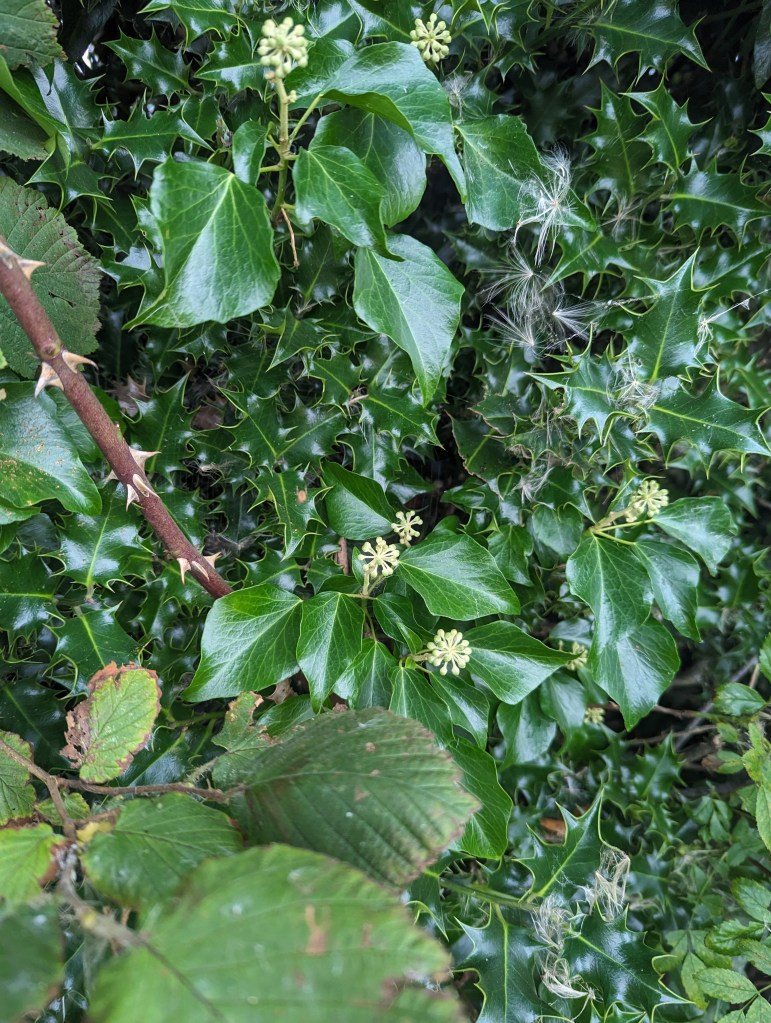
A favourite of mine is the Holly bush. Red berries may be produced in winter but before this the more aged bushes actually sprout flowers on their own. Only plants aged over 10 will do this and this will be good then to passing pigeons that feast on them thus depositing their seeds to plant the next generation elsewhere.
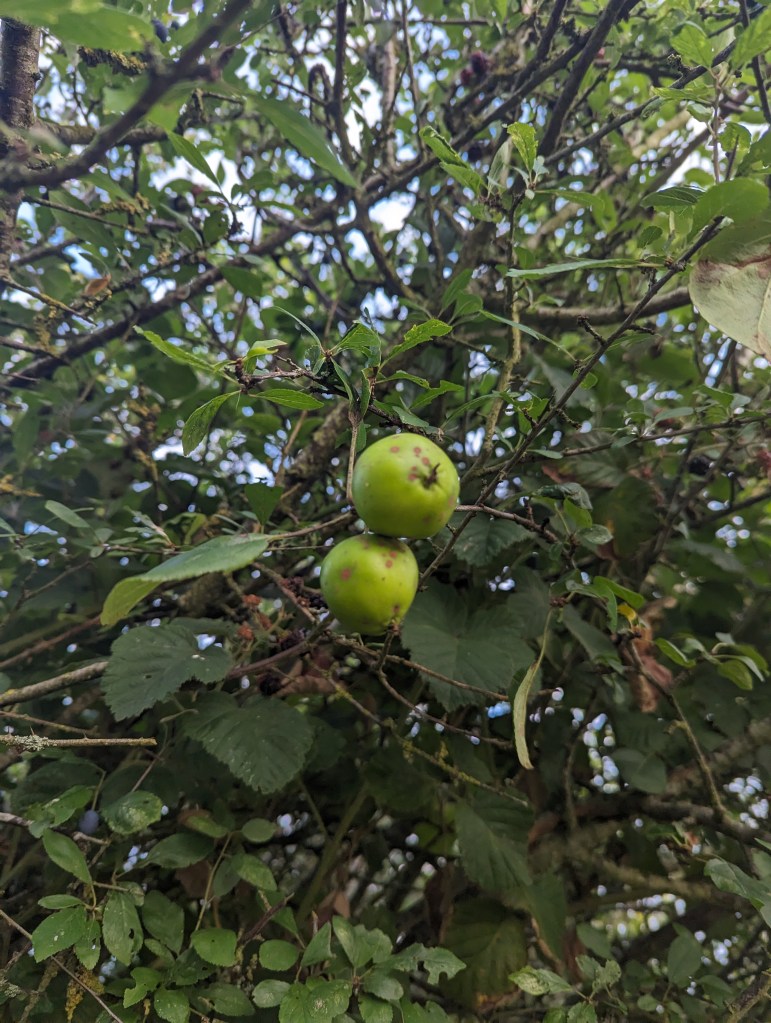
As I brushed along the thick spiky rows of Holly this morning trying not to catch my delicate skin on its outstretched branches I happened across a full crop of Crab Apples. These are of course best known for making Crab Apple Jelly. If I were inclined to pick a few, I could quite easily create myself a lovely preserve at home to stand the test of the passing seasons but I am afraid reader that I do not have the intent to do so! Not this year at least.
I am always amazed by the sheer abundance of species right on my doorstep here in the Midlands. The Countryside is glorious and green and it is also varied and home to a wealth of wildlife. A lot of the time this wildlife evades me as it has a lot of space to hide so perhaps the fact that I find it harder and harder to spy a passing fox or see the signs of a well worn Badger Highway is perhaps indicative that they have the space to hide in the shadows rather than being forced into the light.
Despite their elusiveness the hedgerow floor provides a site for Badger latrines giving away signs that they are in the area. Small holes are dug deep into the ground to make way for rabbit families and squirrels and birds dive in and out of the trees and shrubs making a meal of what nature has to offer.
Hedgerows were created by removing something from the environment. Humans however fight for both sides of the coin. We fight for the land we want to claim and also fight for the flora and fauna to which it rightfully belongs .
Have a beautiful day everyone x
 Emma's Safaris
Leave a comment